
For parents comparing schools
What makes the best kindergarten in Phnom Penh?
Six things worth checking once your child is three — and our own figures against every one of them, published in full.
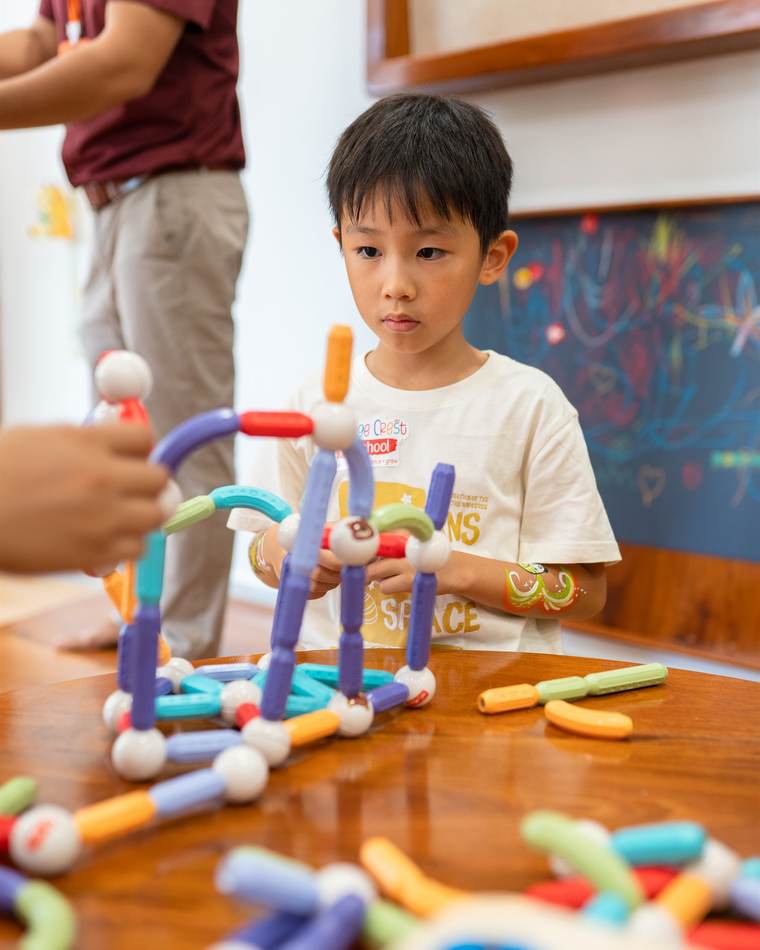
Before you read it
We are one of the schools you would be comparing
This page is written by Orange Crest Preschool, a Montessori and IEYC school in Toul Kork, Phnom Penh. We run a kindergarten-age class ourselves, so we are not a neutral judge and we are not going to pretend to be one.
So you will not find a ranking here, and you will not find us calling ourselves the best kindergarten in Phnom Penh. We have not assessed another school and we are in no position to rate one. What we can do is set out what actually changes at kindergarten age, and then answer every point with our own published numbers so you have something concrete to hold the next school to.
Our staffing and our maximum class size are published for every class — numbers, not adjectives — so you have something exact to hold the next school to.
First, the word
Nursery, kindergarten, preschool — what parents here mean
In Phnom Penh the three words are used interchangeably, and two schools quoting you for "kindergarten" may be quoting for different ages entirely.
The useful distinction is the child, not the label. Under three, a child is settling, learning to be apart from you, and playing alongside others. From three, they begin to concentrate for real stretches, to work with other children rather than beside them, and to start letters and numbers. That second phase is what most people mean by kindergarten, and it is the phase this page is about.
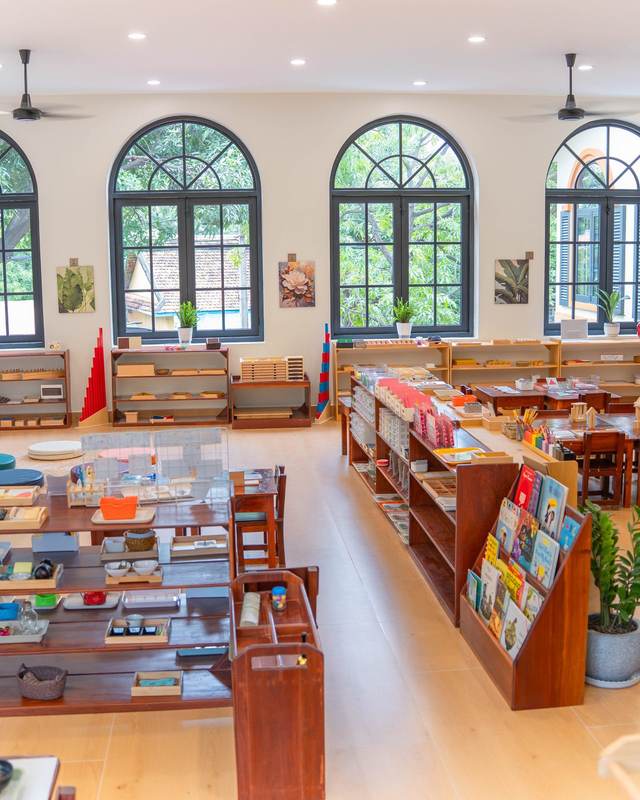
How ours are split
Which class is the kindergarten one
| Class | Ages | Stage | Approach |
|---|---|---|---|
| Bunny Class | 15 months – 2 years | Toddler / nursery years | Play-based |
| Panda Class | 2 – 3 years | Nursery years | Montessori-inspired play-based |
| Giraffe Class | 3 – 6 years | Kindergarten years | Full Montessori |
What to judge
Six things that matter once your child is three
None of these is a matter of taste. Every one is something a school either publishes or does not, which means you can check it before you commit a year.
A long, uninterrupted stretch of work — not a timetable in ten-minute slices
Three- to six-year-olds are the first age that can concentrate deeply, and concentration needs an unbroken run at it. A day chopped into short activities never lets a child get there.
What we publish
Our kindergarten day opens with the Montessori work cycle, 8:00–10:15, before anything interrupts it. The whole week is published cell by cell.
Real teaching hours, stated separately from office hours
Schools here often quote the hours the gate is open. At kindergarten age the gap decides how much teaching your child actually receives.
What we publish
Class hours are 08:00–15:30, full day. Our office is open longer — that is reception, not teaching, and we do not present it as such.
Both languages on the timetable every week
Kindergarten is when reading and writing start. A language offered as an occasional extra will not carry a child into primary school in it.
What we publish
Lessons run in English and Khmer, and both appear as timetabled blocks every week in this class — not as an enrichment add-on.
Teachers you can see, by name, before you enrol
At this age the adult in the room shapes the year more than the building does. "Qualified staff" on a website is not a name you can meet.
What we publish
Every teacher and assistant in this class is named with a photograph on our team page, and Giraffe Class is led by a teacher with an IMC Montessori diploma; the school itself is an IMC member.
A fee schedule with everything that will be billed named on it
The kindergarten year is usually the most expensive of the preschool years. A tuition figure on its own is not what you will pay.
What we publish
$5,500 tuition for the year, plus the $1,000 annual capital fee every child pays — $6,500 all in. New families also pay a one-time $800 enrolment fee, and every charge on top is itemised on our fee page.
Memberships you can check yourself
Anyone can call a classroom Montessori. A named body, which you can look up, is a claim someone else has verified.
What we publish
International Early Years Curriculum (IEYC) — member school · International Montessori Council (IMC) — member school · Ministry of Education, Youth and Sport (MoEYS) — licensed and registered
Our figures
Giraffe Class, 2026–2027, in one table
Our kindergarten-age class in full. Put the same rows beside any other school you are considering — and if a row comes back as an adjective rather than a number, that is worth knowing too.
| Ages | 3 – 6 years |
|---|---|
| Approach | Full Montessori |
| Class hours | Full day 08:00–15:30 |
| Languages taught | English and Khmer |
| Tuition | $5,500 a year |
| Annual capital fee | $1,000, every child |
| Cost of a year, all in | $6,500 |
| One-time enrolment fee | $800 |
| Student-to-teacher ratio | 1 teacher + 3 assistants, up to 25 children |
| Maximum class size | 25 |
| Term 1 starts | 24 August 2026 |
See it with the children in it
Judge it in person, not from a website
Tours run during class hours, so you see the kindergarten room working rather than empty.